 Fairhaven Siding
 Silver Beach Decks Take a Different Kind of Beating
A deck in the Silver Beach area doesn't fail the way a deck in a dry inland climate fails. Around here, the damage is slower and sneakier. Salt air off the water works into fastener heads and metal connectors long before anyone notices a problem. Driving rain doesn't just fall straight down — wind pushes it sideways, under railings and along ledger boards, into joints that were never meant to stay wet. And then there's moss season, which in this part of Whatcom County isn't really a season at all — it's most of the year. Any horizontal wood surface that stays shaded and damp will grow something green on it eventually.
None of that means a deck can't hold up here. It means the materials and the build have to be chosen with this specific climate in mind, not a generic one. That's the difference between a deck that looks good for two summers and one that still looks good in year fifteen.
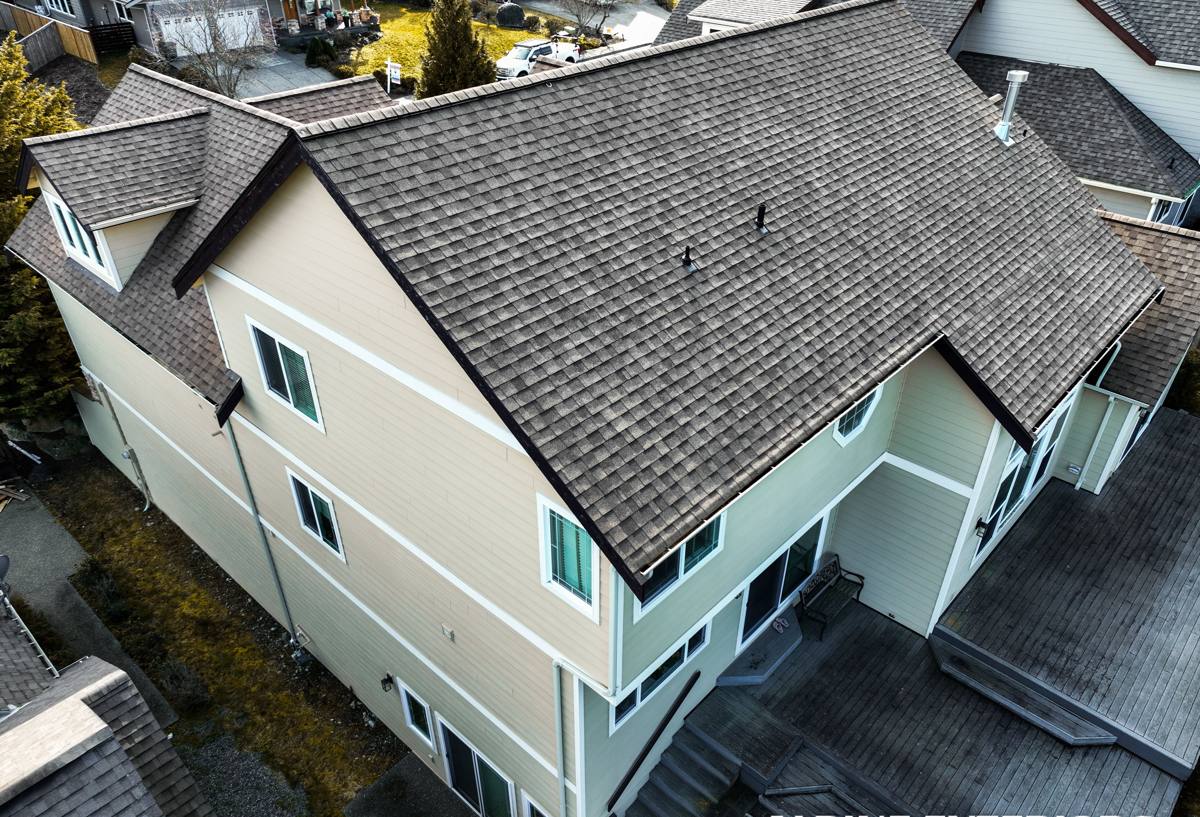
Why Composite Makes Sense for This Climate
Composite decking earns its keep in a place like Fairhaven for one main reason: it doesn't absorb water the way wood does. Wood decking swells when it's wet and shrinks when it dries, over and over, all winter and spring. That cycle is what eventually splits boards, pulls fasteners loose, and creates the rough, splintering surface that makes older wood decks feel unsafe underfoot. Composite boards, especially capped composite, resist that swelling and drying cycle almost entirely. There's no annual sanding, staining, or sealing to keep up with, which matters a lot when the weather window for outdoor maintenance work is as short as it is here.
What Composite Doesn't Solve By Itself
It's worth being honest about this: composite decking resists moisture and rot in the board itself, but it does not fix a bad substructure, poor drainage, or the wrong fasteners. We still see composite decks fail early — not because the boards rotted, but because water got trapped underneath, hardware corroded, or the framing underneath wasn't built for the same lifespan as the decking on top. A composite deck is only as good as everything you don't see once it's finished.
Getting the Substructure Right
This is the part of the job that decides whether a deck lasts one decade or three, and it's the part that's easiest to shortcut. In Silver Beach, we pay close attention to a few things that matter more here than in a drier climate.
Ledger Attachment and Flashing
Where a deck attaches to the house is the single most common source of hidden rot in this region. Flashing has to shed water away from the house framing, not just sit there decoratively. With driving rain coming in at an angle for much of the year, a poorly flashed ledger board will eventually let water behind the siding, and that damage is often invisible until it's expensive.
Footings and Framing
Whatcom County soils vary a lot from lot to lot, and wet clay-heavy ground is common enough that footings need to be sized and set with actual drainage and frost behavior in mind, not just poured to the minimum. We also lean toward corrosion-resistant or composite-compatible joist materials where it makes sense, since standard framing lumber sitting in damp shade for months at a time is exactly the setup that leads to soft, spongy joists years down the road.
Choosing the Right Composite Product for a Wet, Salt-Exposed Site
Not all composite decking is built the same way, and the differences matter more here than in a mild, dry climate. The main split is between capped and uncapped composite.
Capped composite has a plastic outer shell wrapped around a wood-plastic core. That shell is what actually keeps moisture, mildew, and salt air from reaching the fibrous core underneath. Uncapped composite is more exposed to the elements on all sides, which means it can absorb some moisture over time and is more prone to surface mildew in a climate that stays damp and shaded for long stretches of the year. For a site like Silver Beach, we generally steer homeowners toward fully capped boards, particularly on the surface and any picture-framed edges, because that's where moisture exposure is highest.
| Material | Moisture & Rot Resistance | Moss/Mildew Resistance | Ongoing Maintenance | Typical Lifespan Here |
|---|---|---|---|---|
| Pressure-treated wood | Moderate, depends on upkeep | Low without regular cleaning | Annual cleaning, periodic staining/sealing | 10–15 years |
| Uncapped composite | Good | Moderate | Occasional washing | 15–20 years |
| Capped composite | Very good | Good | Light periodic washing | 20–25+ years |
| PVC decking | Excellent | Good | Light periodic washing | 25+ years |
Fastening Systems and Edge Details
How the boards are attached matters almost as much as what they're made of. Hidden fastener clip systems avoid putting screw holes through the top of the board, which removes one more entry point for moisture. Picture-framed edges look clean, but they also create a joint where water can sit if it isn't detailed correctly — so we treat that edge as a place to slow down and get it right, not a place to rush.
Fasteners and Hardware: The Part Homeowners Forget
Salt-laden air is hard on bare or lightly coated metal. Standard hardware that's fine forty miles inland can start showing rust streaks and corrosion within a few seasons here. We use stainless steel or marine-grade coated fasteners, brackets, and joist hardware on decks in this area for exactly that reason. It costs a little more up front. It's a lot cheaper than replacing a bracket that's failed underneath a finished deck.
Our Process, Start to Finish
- Site visit and assessment — we look at drainage, sun exposure, existing structure (if any), and how the site actually behaves in wet weather, not just how it looks on a dry day.
- Design and material selection — board type, fastening system, railing, and any picture framing or accent details, matched to the site and your budget.
- Permitting — we handle the paperwork for the applicable local jurisdiction so you're not left figuring out permit requirements on your own.
- Demolition, if replacing an old deck — including an honest look at the substructure underneath before we build on top of it.
- Framing and flashing — ledger attachment, footings, joists, and drainage detailing, done before a single deck board goes down.
- Decking installation — boards, fascia, and edge details installed with attention to gapping and drainage, not just a straight line of screws.
- Railing and finishing touches — stairs, skirting, and railing systems installed to match the deck and the house.
- Final walkthrough — we go over care and maintenance specific to your material choice before we consider the job done.
Living With a Composite Deck Through a Long Moss Season
Composite decking cuts down on maintenance considerably, but "low-maintenance" isn't the same as "no-maintenance," especially with the amount of shade, rain, and organic debris a lot of Silver Beach properties deal with for much of the year. A little regular attention keeps a composite deck looking new far longer than an occasional deep clean after moss has already taken hold.
- Sweep leaves, needles, and other organic debris off the deck regularly, especially in fall and through the wet months — this is the number one thing that feeds moss and mildew growth.
- Keep nearby gutters and downspouts clear so runoff isn't dumping extra water directly onto or under the deck.
- Wash the surface with mild soap and water and a soft-bristle brush a couple of times a year rather than waiting until buildup is visible.
- Avoid high-pressure power washing directly on composite boards, which can damage the cap layer over time — a garden hose and brush is usually enough.
- Check that board gaps and drainage channels underneath aren't clogged with debris, particularly at the end of moss season.
- Keep planters and mats up off the deck surface periodically so moisture and organic matter don't collect underneath them in one spot.
Why Hire a Crew That Already Works in Silver Beach
A lot of what makes a deck last in this neighborhood isn't in a manufacturer's install manual — it's local knowledge built from seeing what actually fails on real properties here. That includes knowing which lots hold water longer after a storm, which sides of a house take the worst of the wind-driven rain, and which fastener and flashing choices hold up against years of salt air instead of just looking fine on install day. A crew that already works in Fairhaven and the surrounding Whatcom County area has usually already made and learned from the small mistakes that show up five years later on someone else's deck — which means they don't have to make them on yours.
If you're thinking about a new composite deck or replacing an aging one in Silver Beach, we're glad to come take a look and talk through what your specific site actually needs. There's no pressure and no cost for the estimate — just a straightforward assessment and honest recommendations based on your property, your budget, and the climate we all live in.