 Fairhaven Siding
 Siding Replacement for South Hill Homes
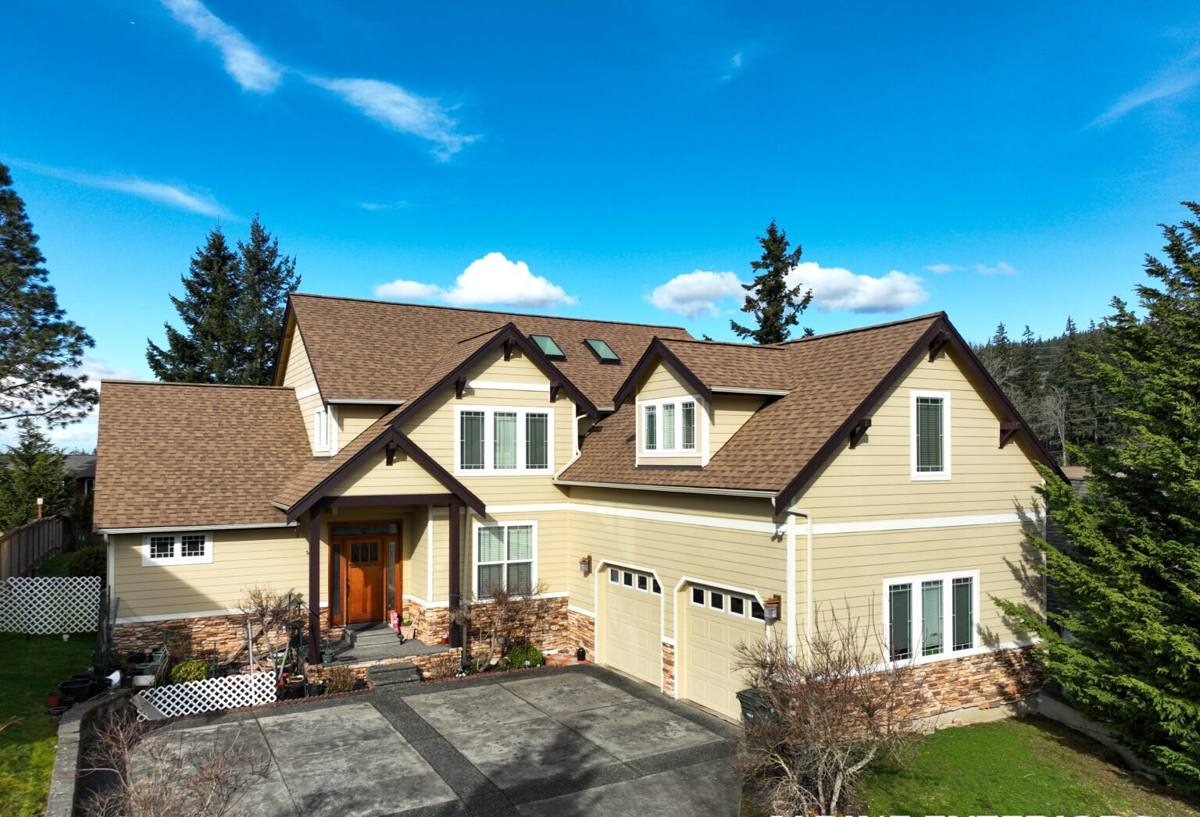
South Hill sits on the rise above Fairhaven and Bellingham Bay, and that elevation and exposure shape what siding replacement actually needs to accomplish here. Homes on this hillside catch wind off the water more directly than properties tucked into lower, more sheltered parts of the city, and many lots have mature trees and steep grades that keep walls shaded and slow to dry after a storm. When we talk about siding replacement in South Hill specifically, we're talking about a job that has to account for salt-tinged marine air, rain that comes in sideways more often than straight down, and a moss season that can run most of the year on north-facing or tree-shaded walls. This page covers what that means for the material, the installation, and the process, not siding replacement in general.
Why South Hill's Climate Is Hard on Siding
Salt Air at Elevation
Being higher up doesn't put a South Hill home out of reach of Bellingham Bay's salt-laden air. It just changes how that air moves across the property, often with more wind behind it. Over years, that steady low-grade exposure works on fasteners, caulking, and lower-grade finishes in ways that aren't dramatic day to day but add up to premature fading, chalking, and rust bleed at nail heads.
Wind-Driven Rain on a Slope
Hillside positioning tends to mean more direct wind exposure, and wind is what turns ordinary rain into wind-driven rain that finds its way into lap joints, trim seams, and wall penetrations from angles a calmer-climate siding system was never really built to handle. A wall that would stay dry on a sheltered lot can still take on water here because of how wind interacts with the slope and the open exposure toward the bay.
A Long Moss and Mildew Season
Mature tree cover is common on South Hill's residential streets, and the shade it throws keeps siding and trim damp longer after every rain event. Combined with Whatcom County's mild, wet climate, that adds up to an extended moss and mildew season, especially on shaded or north-facing elevations. Porous or moisture-retentive materials become a growth surface over time, and the problem usually starts in spots homeowners rarely check: behind landscaping, under eaves, along the shaded side of the house.
Grading, Drainage, and Foundation Splash
Sloped lots change how water moves once it hits the ground. Runoff that would simply soak in on a flat property instead sheets across South Hill yards and can splash back up against the lower courses of siding during heavy rain. That makes clearance from grade and correct water-management detailing at the base of the wall a bigger factor here than on flatter terrain.
What "Correct" Siding Replacement Looks Like Here
Siding replacement isn't just swapping old material for new. Done right, it's a full water-management system: house wrap, flashing, fastening pattern, joint treatment, and clearance from grade and roofline all have to work together. On a South Hill property, we pay particular attention to a few details that matter more here than on a typical inland lot.
- Flashing at every penetration — windows, vents, hose bibs, and light fixtures are common entry points for wind-driven rain if flashing isn't integrated correctly with the house wrap.
- Correct clearance from grade — siding installed too close to the ground on a sloped lot invites splash-back moisture and accelerates rot at the bottom course.
- Lapped and sealed joints — horizontal and vertical joints need to shed water in the direction it actually travels here, which is often sideways, not just down.
- Fastening pattern matched to wind exposure — elevated, more exposed sites benefit from fastening that accounts for real wind load, not just a generic minimum spec.
- Ventilation behind the cladding — a wall assembly that can't dry out between rain events is the single biggest driver of moss, mildew, and hidden rot on shaded South Hill lots.
Why We Only Install James Hardie Fiber Cement Siding
We install James Hardie fiber cement siding, and only James Hardie, on every replacement job, including on South Hill. That's not a brand preference, it's a professional standard we settled on after seeing how different materials actually hold up in this specific climate over years, not just on the day they're installed.
- Non-combustible core: Fiber cement doesn't feed a fire the way wood-based siding products can.
- Factory-applied ColorPlus finish: The color coat cures under controlled factory conditions rather than being brushed on at the job site, which gives it real resistance to fading, chalking, and moisture intrusion, exactly the failure modes South Hill's salt air and sun exposure accelerate.
- Climate-engineered HZ product lines: Hardie's HZ5 formulation is built for regions with heavy sustained moisture and freeze-thaw cycling, a closer match to coastal Whatcom County than a generic national spec.
- Dimensional stability: Fiber cement doesn't swell, cup, or warp the way engineered wood products can after repeated wet-season moisture cycles.
- Strong transferable warranty: Hardie backs its products with a substantial warranty structure, provided the installation follows spec, which is why our installation detail matters as much as the material choice.
We don't install LP SmartSide, vinyl siding, Cemplank, Allura, primed spruce, or cedar. Those are legitimate products installed competently by plenty of contractors. Our call was that in a climate this consistently wet, salt-exposed, and wind-driven, standing behind one system we understand completely serves South Hill homeowners better than offering a cheaper option that quietly shifts maintenance risk onto them years down the road. Engineered wood products are more sensitive to moisture at cut edges and fastener penetrations than fiber cement. Vinyl is affordable but can warp in direct sun, crack in a cold snap, and trap moisture behind the panel if house wrap and flashing weren't installed with real care. Cedar and primed spruce are genuinely attractive but need ongoing painting or sealing, and in a climate that stays wet this much of the year, that maintenance schedule tends to slip, which shortens the material's real-world lifespan well below what it's rated for.
Signs a South Hill Home Needs Siding Replacement
- Moss or dark staining that returns quickly after cleaning, especially on shaded or north-facing walls
- Siding that feels soft, spongy, or delaminated when pressed, a sign moisture has been tracking behind it
- Paint that's peeling or bubbling in patterns that follow seams, joints, or window trim
- Visible warping, cupping, or gaps opening up between siding courses
- A musty smell near exterior walls, which often means moisture has already reached the sheathing
- Rust streaks below nail heads or fasteners that have started to back out
None of these on their own always mean a full tear-off, but they're worth a real inspection rather than a guess. Isolated damage can sometimes be repaired and matched into existing Hardie siding. Widespread moisture behind the wall assembly, or siding that's simply reached the end of its service life, usually means a patch job just delays a bigger project.
Our Siding Replacement Process
- On-site walk and assessment — we look at wall condition, existing substrate, drainage, and exposure specific to your property's position on the hill.
- Straight answer on scope — repair versus full tear-off, explained in plain terms along with why.
- Tear-off and substrate check — removing old siding exposes sheathing and framing, which lets us catch and address hidden moisture damage before new material goes on.
- House wrap and flashing installed as one system — not as separate steps, but as an integrated water-management layer built for wind-driven rain.
- James Hardie installation to spec — correct fastening, clearance, and joint treatment, the details that determine whether the material performs the way it's engineered to.
- Final walkthrough — we review the finished work with you before considering the job done.
Siding Replacement Cost Factors on South Hill
| Factor | What It Affects | Why It Matters on South Hill |
|---|---|---|
| Home age and wall complexity | Total material and labor | Older homes on the hill often have more trim detail and roofline intersections where wind-driven rain can work its way in |
| Tear-off vs. overlay | Labor scope and substrate access | Tear-off exposes hidden moisture damage that's common under decades-old siding on exposed, elevated lots |
| Substrate condition | Repair costs before new siding goes on | Years of trapped moisture behind failing siding can rot sheathing and framing before it's visible from outside |
| Slope and site access | Labor time, staging, and equipment needs | South Hill's grade can add scaffolding, staging, and setup time compared with flat lots |
| Tree cover and shade | Drying time and long-term maintenance | Heavily shaded elevations need more attention to ventilation behind the cladding to avoid trapped moisture |
| Trim and color selection | Material cost and finish longevity | ColorPlus factory finishes outlast field-applied paint against salt air and UV exposure |
Real numbers depend on the specific house, its exposure, and its existing condition, which is why we walk the property in person before quoting instead of pricing off square footage alone.
Why Hire a Crew That Already Works South Hill
Siding replacement done for a sheltered, flat inland lot and siding replacement done for an exposed, sloped hillside property near Bellingham Bay are not the same job, even if the square footage matches. A crew that already works South Hill knows to check fastening patterns against real wind exposure, knows which elevations need extra attention to drying and ventilation, and knows how site grading on the hill affects water management at the base of the wall. That's the kind of judgment that comes from doing the work in this specific area repeatedly, not from a generic install checklist.
If your South Hill home's siding is showing its age or you're just weighing whether repair or full replacement makes more sense, we're glad to take a look. Fill out the form below for a free, no-pressure estimate.