 Fairhaven Siding
 Deck Building for Sudden Valley's Wooded, Lake-Adjacent Lots
Sudden Valley sits among trees and slopes around Lake Whatcom, and that setting shapes almost every deck-building decision on a property here. Heavy tree canopy means shade that never fully dries out. Sloped, wooded lots mean drainage has to be planned, not assumed. And the broader Whatcom County climate — the same marine-pushed weather that brings driving rain and salt-tinged air through the rest of the county — reaches inland to Lake Whatcom too, just filtered through more forest. A deck built the same way you'd build one in a dry, open-sun lot in another part of the country will not hold up the same way out here. This page covers what actually matters for a deck in Sudden Valley: the climate factors, the construction details that keep water and moss from winning, and how we approach the job from first site visit to final walkthrough.
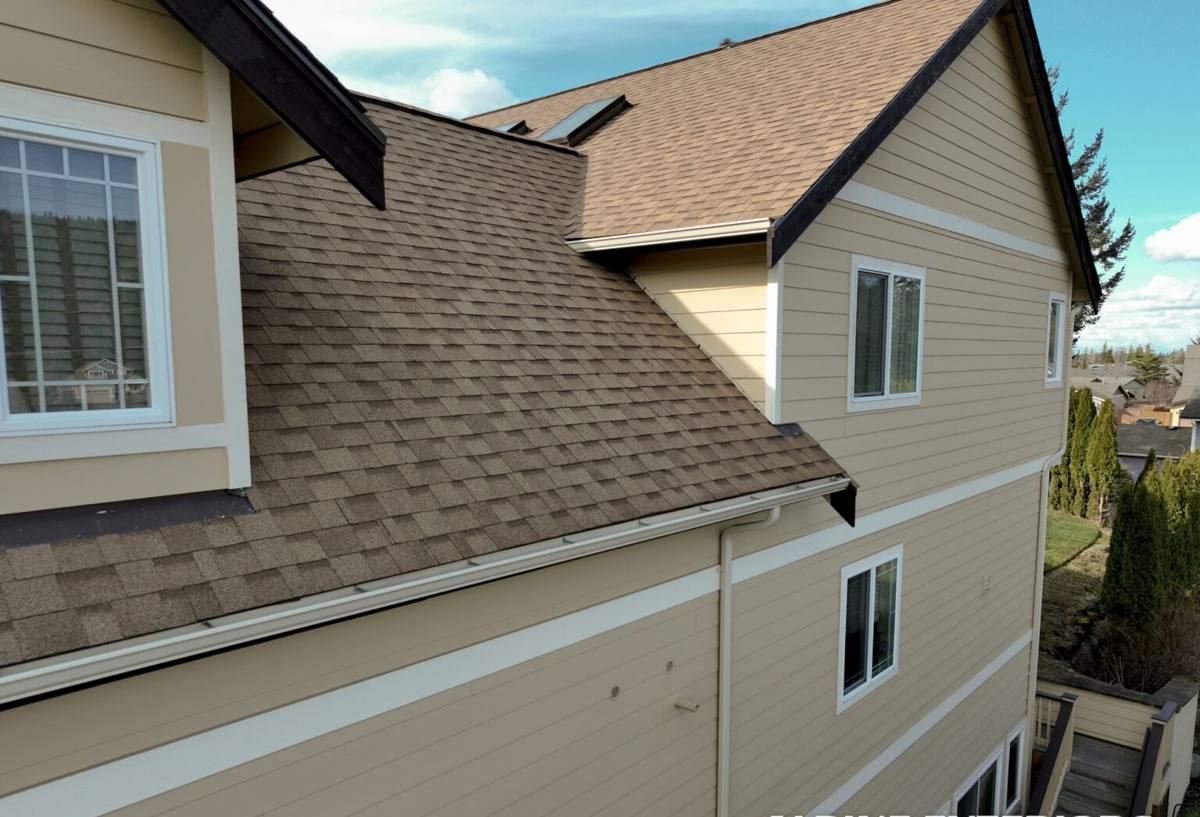
Why This Climate Is Hard on an Outdoor Deck
Shade and Standing Moisture
A deck tucked under fir or cedar canopy — common on Sudden Valley lots — dries far more slowly after rain than a deck in open sun. Boards, joists, and fasteners stay damp longer, which is exactly the condition wood-decay fungi and moss need to establish themselves. Needle and leaf litter from surrounding trees also collects in board gaps and against ledger boards, holding moisture against the structure instead of letting it shed.
Driving Rain, Not Just Rainfall Totals
What causes problems for decks in this region isn't just how much rain falls — it's how it arrives. Wind-driven rain pushes water sideways into ledger connections, under flashing laps, and into any gap that a calm, straight-down rain would never reach. The connection where a deck attaches to the house is the single most common failure point we see in this climate, precisely because that's where wind-driven water gets forced.
Marine Air and Corrosion
Whatcom County's marine-influenced air carries moisture and a degree of salt content even away from the immediate shoreline, and it accelerates corrosion in fasteners, hardware, and metal connectors that aren't rated for it. A deck that looks fine on day one can start showing rust streaks and loosening hardware within a couple of seasons if the wrong fasteners went into it.
What a Deck Built for This Area Needs to Get Right
- Ledger flashing that actually sheds water away from the house band board, not flashing that's just tucked in and caulked
- Corrosion-resistant fasteners and connectors throughout — not just at the ledger, but at every joist hanger and structural screw
- Footings sized and set to local frost depth and the actual soil conditions on the lot, which vary a lot across sloped Sudden Valley properties
- Board spacing and joist layout that allow airflow underneath, especially critical on shaded lots where drying time is already limited
- A drainage plan for the ground under and around the deck, so runoff doesn't pool against footings or the house foundation
- Material choices that account for moss and algae growth, not just rot resistance
Choosing a Decking Material for a Shaded, Wet Lot
There's no single "right" decking material for every Sudden Valley property — it depends on how much sun the deck gets, how much maintenance the owner wants to do, and budget. Here's how the common options actually compare in this specific climate, not in a generic sales sheet.
| Material | Moss/Algae Resistance | Maintenance | Typical Lifespan Here | Relative Cost |
|---|---|---|---|---|
| Pressure-treated wood | Low — needs regular cleaning and sealing to resist growth in shade | Annual cleaning, periodic re-staining/sealing | 10–15 years with upkeep | Lowest |
| Cedar | Moderate — naturally rot-resistant but still grows moss if never cleaned | Cleaning and oil/sealer every 1–2 years | 15–20 years with upkeep | Mid |
| Composite | Good — but capped boards can still get slick with algae film in deep shade | Periodic washing; no staining/sealing needed | 25–30 years | Higher |
| PVC | Best resistance to moisture absorption and organic growth | Lowest — mostly occasional washing | 25–30+ years | Highest |
For heavily shaded lots, we lean toward steering owners away from bare pressure-treated wood as the sole finish surface, not because the material fails outright, but because it demands more upkeep than most owners realistically keep up with under tree cover. Composite and PVC cost more up front but ask less of the owner over the life of the deck — a fair trade-off worth spelling out honestly rather than upselling.
The Substructure: What Actually Determines How Long a Deck Lasts
The decking boards are what you see and walk on, but the framing underneath is what determines whether the deck is still sound in twenty years. This is the part that gets skipped when a job is priced too low.
- Ledger attachment and flashing — proper metal or membrane flashing, lapped correctly, sealed at the right points, with structural lag bolts or through-bolts rather than undersized screws
- Joist hangers and structural screws — rated for exterior/coastal exposure, not standard interior-grade hardware
- Joist tape or coating on the tops of joists to keep standing water from sitting directly against cut wood
- Footings set below frost depth and sized for the actual soil bearing capacity of the lot, which on sloped Sudden Valley properties can vary from one corner of the deck to the other
- Post bases that keep posts elevated off concrete, avoiding direct wood-to-concrete contact where water collects
None of this is visible once the decking goes down, which is exactly why it's worth asking a contractor directly what hardware and flashing details they use before the job starts — not after.
Our Process for a Sudden Valley Deck Project
Site Assessment
We walk the actual lot — slope, tree cover, existing drainage patterns, soil condition, and how the sun (or lack of it) hits the proposed deck location through the day. This is not a generic walk-through; it directly shapes footing placement, joist spacing, and material recommendations.
Design and Permitting
Deck permits in Whatcom County are based on size, height, and structural attachment, and we handle that process as part of the job. If a property is part of a homeowners' association with design or architectural review requirements — as many properties in Sudden Valley are — we account for that timeline up front so it doesn't stall the project midway.
Construction
Footings and framing go in first, built to the standards above, followed by decking, railing, and any stairs. We inspect our own ledger and flashing work before it's covered by decking, since that connection is the one place you don't get a second look once the job is finished.
Final Walkthrough
We walk the finished deck with the owner, cover basic care for whatever material was chosen, and flag anything on the property — drainage, nearby trees, grading — worth keeping an eye on over time.
Maintenance Checklist for Owners
Whatever material a deck is built from, a little seasonal attention goes a long way in this climate. A short list worth keeping around:
- Sweep needles, leaves, and debris out of board gaps regularly, especially in fall and under tree cover
- Clean visible moss or algae film off boards before it gets slick, rather than waiting for it to build up
- Check the ledger board area at the house connection once a year for signs of staining, gaps, or soft wood
- Confirm gutters and downspouts near the deck are directing water away, not onto or under it
- Reseal or re-stain wood decking on the schedule the material actually needs, not just when it looks bad
- Look underneath the deck once a year for standing water, sagging joists, or corroded hardware
Why Hiring a Crew That Already Works in Sudden Valley Matters
A deck contractor who hasn't worked wooded, sloped lots around Lake Whatcom will often price and plan the job as if it were a flat, sunny yard — and the gaps show up later as drainage problems, premature moss growth, or a ledger connection that wasn't flashed for the amount of wind-driven rain this area actually gets. Working locally in Whatcom County also means knowing the permitting process, understanding what HOA architectural review actually asks for, and having realistic expectations about site access and drainage on the kind of terrain common in this neighborhood. That local experience shows up in fewer surprises during construction and a deck that's actually built for the conditions it will sit in, not a generic set of plans.
If you're planning a new deck or need an honest look at whether an existing one is holding up the way it should, we're happy to come take a look. The estimate is free, there's no pressure, and you'll get a straight answer about what your property actually needs — just fill out the form below.